
Should Monkeys Be Controlled or Removed? Pros, Cons & Solutions
14 Jun 2026 Alpine Asian Treks
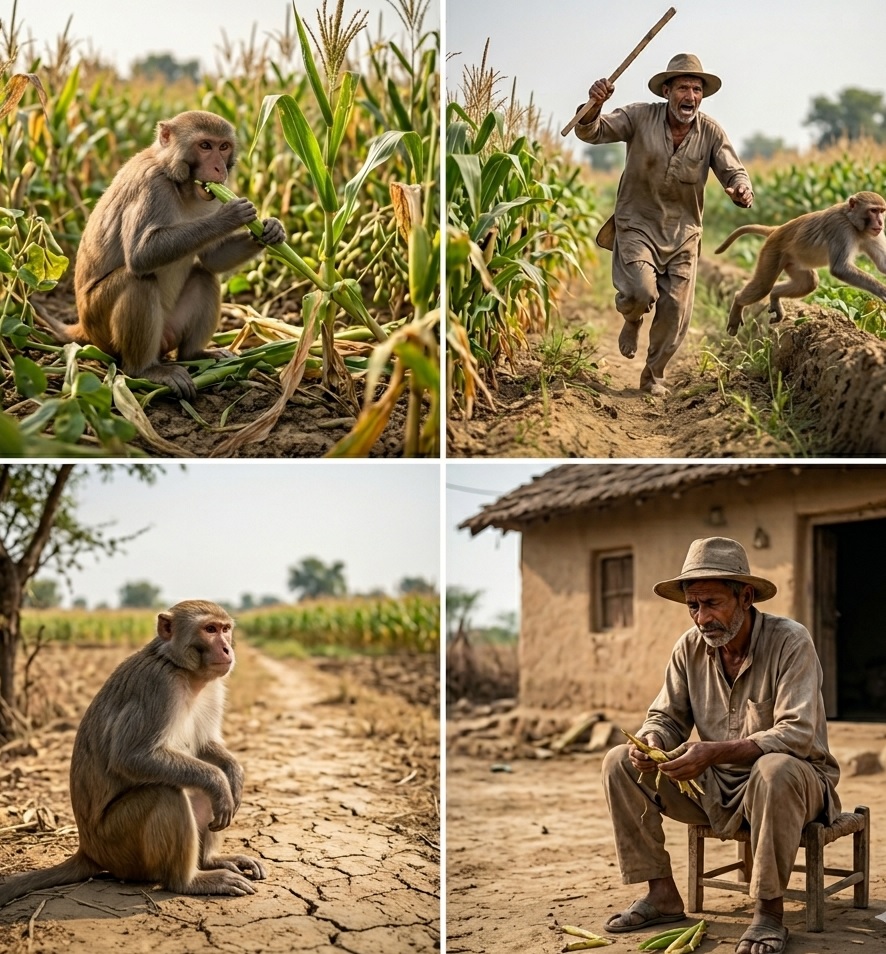
In this 21st century, humans have been continuously doing researches to make life simpler and more comfortable. In this context, various studies are ongoing regarding all forms of aquatic and terrestrial life existing on this Earth.
According to these studies, every living being and plant on this planet plays an equally important role in keeping our environment balanced. If any plant or animal is removed from this ecosystem, it immediately creates serious problems, and humans directly suffer the consequences.
It is often said that humans share a close bond with monkeys. At a quick glance, they share many similarities with us. However, these social animals have emerged as a severe problem in Nepal today. There are numerous examples, especially in rural areas, where monkeys eat farmers’ crops, destroy plants, and even attack back to farmers if they are alone. Not only this, but nowadays they do not even fear dogs; instead, they counter-attack them. Instances of monkeys attacking people who try to chase them away are also plenty. If a farmer cannot harvest their crops, their source of food and income is completely shut down. This directly affects their children’s education and daily life. When a whole year of hard work goes to waste, it leaves them disheartened, which further worsens the conflict between humans and wildlife.
In the past, monkeys could be chased away with the help of dogs, by making noise hitting tin cans, or by using slingshots (gudeli). But nowadays, they do not care about any of these methods. If no new technology is developed to solve this severe problem, protecting crops from monkeys has now become nearly impossible.
The brown Assamese monkey found in Nepal is listed as a protected animal. The law of 2030 B.S. (1973 A.S.) prohibits killing them in Nepal. If someone kills a monkey, they can face 1 to 10 years of imprisonment or a fine ranging from 100,000 to 500,000 Rupees.
Monkeys do benefit both humans and the environment. With the help of monkeys, various medical researches are conducted and applied to humans. Similarly, monkeys help disperse plant seeds and fruits from one place to another. More importantly, monkeys also help deter fierce predators like tigers and leopards from entering human settlements.
However, this does not mean that farmers can tolerate the immense suffering caused by them. To address this, the Government of Nepal needs to create short-term and long-term plans to stop this issue starting today. If this is not done, the migration of people from the hills to district headquarters or cities under this pretext will increase even more. It is absolutely necessary to control this situation, even if it requires declaring an emergency.
If we look at examples of wildlife management in other countries, when the animal population exceeds the capacity of their habitat and food supply, they grant permission to control their growth or even cull a specific number. For this, the state must amend or adjust the necessary laws as required.
These days, accusations and counter-accusations regarding the monkey issue are widespread across social media and from Maitighar Mandala to the entire country. The people advocating for animal rights at Maitighar Mandala seem to take the suffering and torment faced by farmers lightly, or perhaps they do not understand the reality. Instead of fighting, it would be much better if everyone agreed on how to create a win-win environment for both humans and animals. There is also an example from India where monkeys were successfully sterilized. According to a study by researcher Sobita Koirala, although community forest areas have increased in Nepal, the specific trees and plants that provide food and fruits for monkeys have not increased.
First, save the farmers. If the crops they plant are not protected, it will directly affect all of our kitchens. But a greater danger lies ahead: the day farmers stop growing crops, those monkeys will head to the district headquarters in search of food. From the headquarters, they will reach the Parliament building, and eventually, they will make their way to Maitighar Mandala as well.
Therefore, let us think as conscious human beings. For a proper solution, let us all think together, support each other, and create the necessary pressure.
Let’s stop fighting.
These Asami Monkey are found all over in Nepal like Everest region , Annapurn region, Lanngtang region.
These are my personal views and are not targeted at anyone.