
How Climate Change Is Transforming Nepal’s Himalayan Glaciers
8 Oct 2026 Alpine Asian Treks
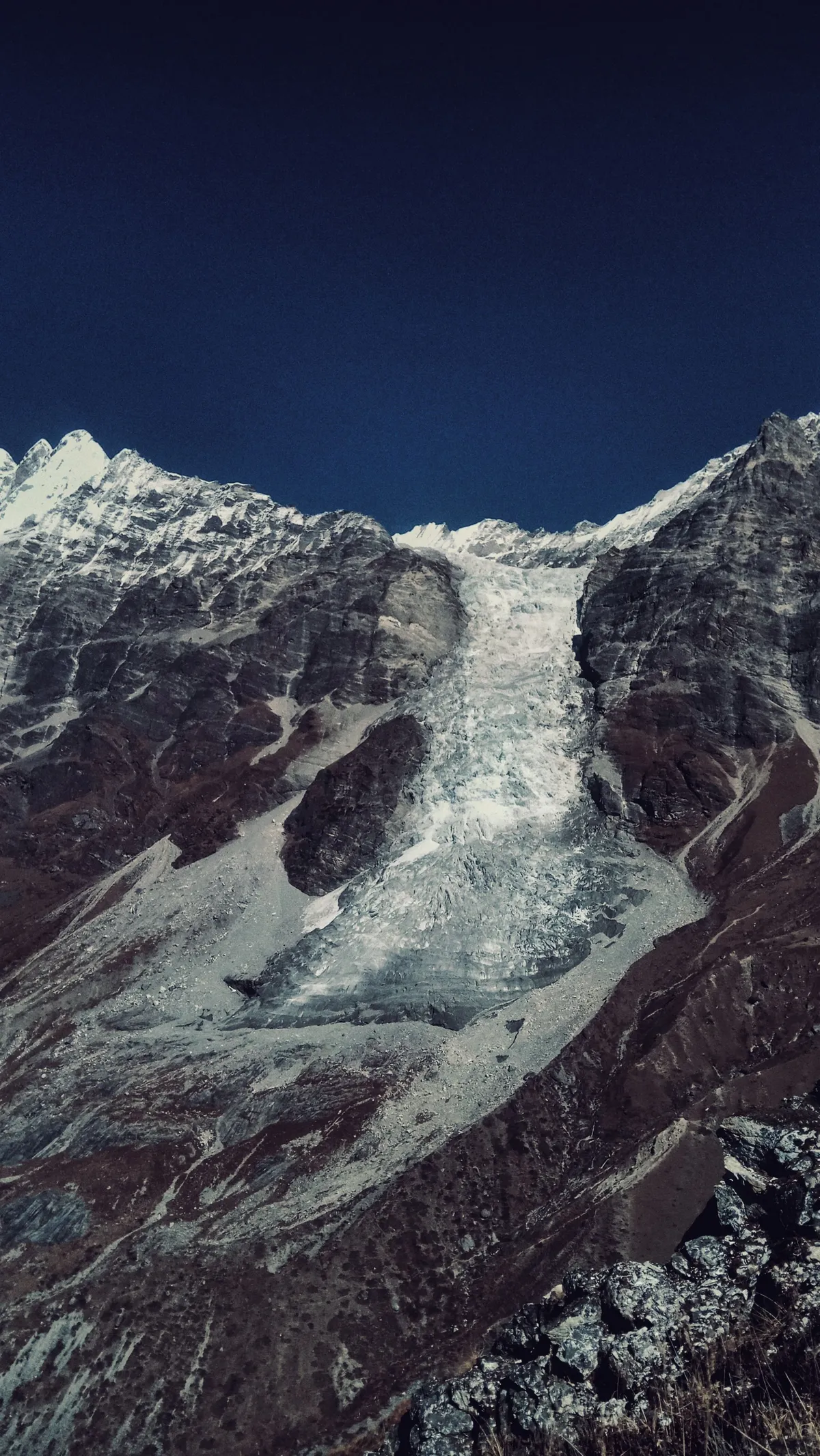
Nepal is famous around the world for its towering Himalayan mountains, dramatic valleys, and ancient glaciers. From Mount Everest to the remote valleys of the Himalayas, snow and ice have shaped the country’s landscape, water systems, culture, and tourism for centuries. Today, however, these frozen landscapes are changing rapidly.The effects of climate change in Nepal are becoming increasingly visible across the Himalayas. Rising temperatures are causing glaciers to lose ice, snow patterns are changing, and glacial lakes are expanding in some areas.
These changes can create new risks for mountain communities while also affecting water resources, agriculture, hydropower, biodiversity, and tourism. For a country whose identity and economy are closely connected to the Himalayas, climate change in Nepal is much more than an environmental concern. It is becoming an important issue for the country’s future. Understanding how climate change in Nepal is transforming Himalayan glaciers can help explain why the mountains are changing and what those changes could mean for generations to come.
Nepal’s Himalayan Glaciers Are Changing
Glaciers are massive bodies of ice that develop when snow accumulates and remains in place for many years. Over time, the weight of the snow compresses it into ice. Glaciers slowly move through mountain valleys and release water as they melt. Nepal contains thousands of glaciers across its Himalayan region. They form an important part of the country’s mountain environment and contribute to river systems that provide water far beyond the high mountains. However, climate change in Nepal is affecting the balance between snowfall and ice loss. When glaciers lose more ice than they gain from snowfall, their overall mass decreases and the glacier begins to retreat.
Scientific observations across the Hindu Kush Himalaya show that glacier ice loss has accelerated significantly in recent decades. ICIMOD’s regional assessments have reported that the rate of glacier loss has approximately doubled since the beginning of the 21st century compared with previous decades. This long-term trend makes climate change in Nepal an increasingly important factor in understanding the future of the country’s glaciers.
How Rising Temperatures Affect Glaciers
Temperature plays a major role in glacier health. When temperatures increase, more snow and ice can melt. Warmer conditions can also cause precipitation that would previously have fallen as snow to fall as rain, reducing the amount of fresh snow available to replenish glaciers. The relationship between climate change in Nepal and glacier retreat is not identical everywhere. Individual glaciers respond differently depending on elevation, snowfall, precipitation, debris cover, slope, and surrounding geography. Nevertheless, the overall trend across the Himalayas is concerning.
Research has documented widespread glacier shrinkage, negative mass balance, declining ice volume, and changes in the altitude at which glaciers maintain a balance between accumulation and melting. The significance of climate change in Nepal becomes clearer when these changes are considered over decades rather than individual years. A glacier may appear stable during one season, but consistent ice loss over many years can fundamentally alter the landscape.
Melting Glaciers and Expanding Glacial Lakes
One of the most important consequences of glacier retreat is the development and expansion of glacial lakes. When a glacier retreats, water can collect in depressions left behind by the ice. Some of these lakes are held back by natural dams made from rock, sediment, and glacial debris. These natural barriers can be unstable. If a glacial lake suddenly releases a large amount of water, the resulting event is known as a Glacial Lake Outburst Flood, or GLOF. This is one of the major reasons climate change in Nepal is connected to disaster-risk concerns. As glaciers retreat and some glacial lakes expand, the volume of water stored in high-altitude environments can increase.
If a natural dam fails because of an avalanche, landslide, earthquake, extreme rainfall, or other trigger, a destructive flood can move rapidly downstream. ICIMOD has identified numerous glacial lakes throughout the Hindu Kush Himalaya and has emphasized the importance of monitoring potentially dangerous lakes.
What Is a Glacial Lake Outburst Flood?
A GLOF occurs when water stored in a glacial lake is suddenly released.
Several factors can trigger such an event, including:
- Ice avalanches
- Rockfalls
- Landslides
- Moraine-dam failure
- Heavy rainfall
- Rapid glacier melting
- Earthquakes
- Changes in natural drainage
The resulting flood can carry huge amounts of water, mud, rocks, ice, and debris through steep mountain valleys. The relationship between climate change in Nepal and GLOF risk is therefore receiving increasing attention from scientists and disaster-management authorities. However, it is important not to assume that every Himalayan flood is directly caused by climate change. Mountain disasters are often the result of multiple interacting factors, including geology, rainfall, topography, glacier conditions, and human infrastructure. Climate change in Nepal can alter the conditions under which these hazards develop, but individual events still require detailed scientific investigation.
Recent Events Highlight the Growing Concern
The issue has received renewed attention following major flooding and debris events in the Himalayan region during 2026. Recent scientific and media reports have highlighted how unstable combinations of glacier ice, rock, water, and steep mountain terrain can produce sudden and destructive events. Such disasters are a reminder that Himalayan landscapes are not static. Scientists have warned that warming can contribute to glacier retreat and thawing of previously frozen ground, potentially increasing instability in some high-mountain environments.
However, attributing a specific disaster entirely to climate change in Nepal without detailed analysis would be misleading. Each event has its own combination of physical causes. The broader concern is that warming temperatures are changing the environmental conditions across the Himalayas, potentially increasing exposure to certain hazards.
Why Glacier Loss Matters for Nepal’s Water
Glaciers are an important part of Nepal’s water system. Snow and ice stored in the mountains contribute to rivers that support communities, agriculture, ecosystems, and hydropower. In the short term, increased glacier melting can increase water availability in some river systems. But this does not mean that accelerated melting is beneficial indefinitely. A glacier contains a finite amount of stored ice. If it continues losing mass over decades, there will eventually be less ice available to melt. This creates uncertainty about future water availability.
The long-term effects of climate change in Nepal may therefore include changes in the timing, amount, and reliability of water flowing from mountain environments. For communities dependent on predictable water supplies, these changes could become increasingly important.
Impact on Agriculture
Agriculture remains an important part of life in Nepal, particularly in rural communities. Farmers depend on reliable water supplies for irrigation and livestock. Changes in rainfall patterns, temperature, snowmelt, and river flows can make agricultural planning more difficult. The effects of climate change in Nepal are not limited to glacier regions. Changes in weather can influence planting seasons, crop productivity, soil moisture, and the availability of irrigation water. Mountain farmers can be particularly vulnerable because many communities have limited access to alternative water sources and infrastructure. This means glacier changes are connected to a much larger climate system affecting livelihoods throughout the country.
Impact on Hydropower
Nepal has enormous potential for hydropower because of its mountainous terrain and extensive river networks. But hydropower infrastructure is also exposed to environmental hazards. Floods, landslides, debris flows, extreme rainfall, and changing river conditions can damage roads, bridges, power stations, transmission lines, and other infrastructure.
As climate change in Nepal continues to influence rainfall, temperature, glacier conditions, and mountain hazards, future hydropower projects will need to consider changing environmental risks. Designing infrastructure only around historical climate conditions may no longer be sufficient. Long-term planning should consider how future climate conditions could affect river flows and extreme events.
Impact on Himalayan Communities
People living in mountain regions are among those most directly exposed to environmental changes. Many communities depend on agriculture, livestock, tourism, trade, and natural resources. Mountain roads and bridges are also essential connections between villages and larger towns. When a landslide or flood damages a road, communities can become isolated. The social effects of climate change in Nepal can therefore extend far beyond the original environmental event. Damage to homes, farmland, trails, bridges, hydropower projects, and tourism infrastructure can create significant financial pressure for families and local governments. For mountain communities, adapting to changing environmental conditions is becoming an increasingly important part of long-term development.
What Does Climate Change Mean for Trekking?
Nepal’s Himalayan environment attracts hundreds of thousands of travelers interested in trekking, mountaineering, and adventure tourism. Popular trekking regions include Everest, Annapurna, Langtang, Manaslu, and many other mountain areas. Changes in glaciers and mountain conditions can affect trekking landscapes and infrastructure. Trails may be exposed to landslides, rockfall, floods, changing river crossings, and unstable slopes. The effects of climate change in Nepal do not mean that trekking will disappear. Instead, the tourism industry may need to become more adaptable and environmentally responsible.
Trekking agencies, guides, local communities, authorities, and travelers all have a role to play in protecting the mountain environment and responding to changing conditions. Visitors should follow local guidance, respect temporary trail closures, avoid unnecessary environmental damage, and support responsible tourism practices.
The Himalayas and Global Climate Change
Nepal’s contribution to global greenhouse gas emissions is relatively small compared with major industrialized countries. Yet the country is highly exposed to the consequences of global warming. This makes climate change in Nepal part of a wider climate-justice discussion. The Hindu Kush Himalaya provides water resources for enormous populations across Asia. Changes in the region’s glaciers and snow systems can therefore affect communities far beyond Nepal. The consequences can influence water security, agriculture, ecosystems, energy production, and disaster risks across national borders. The Himalayas may be located in a remote part of the world, but their environmental importance is global.
How Nepal Can Respond
Nepal cannot solve global warming alone, but it can reduce the risks associated with a changing climate. Several measures can help the country adapt.
Improve Glacier Monitoring
Regular monitoring using satellites, field measurements, drones, and other technologies can help scientists understand how glaciers and glacial lakes are changing.
Strengthen Early-Warning Systems
Early-warning systems can give downstream communities valuable time to respond to floods and other hazards.
Build Climate-Resilient Infrastructure
Roads, bridges, hydropower facilities, and settlements should be designed with future climate risks in mind.
Improve Community Preparedness
Local communities need practical evacuation plans, emergency communication systems, training, and access to reliable information.
Protect Mountain Ecosystems
Forests, wetlands, watersheds, and other ecosystems can strengthen resilience to environmental changes.
Encourage Regional Cooperation
Glaciers and rivers cross national boundaries. Nepal and other Himalayan countries need to cooperate on scientific research, water management, disaster preparedness, and climate adaptation. These actions can help Nepal respond to the growing challenges associated with climate change in Nepal.
Can Nepal’s Glaciers Be Saved?
The future of Nepal’s glaciers is closely connected to the future of global greenhouse gas emissions. Local adaptation can reduce risks, but it cannot completely stop glacier loss if global temperatures continue to rise. Recent assessments indicate that glacier ice loss across the Hindu Kush Himalaya is accelerating. Reducing global emissions can slow future warming and limit additional ice loss. At the same time, Nepal can invest in monitoring, early-warning systems, climate-resilient infrastructure, scientific research, and community preparedness. Addressing climate change in Nepal therefore requires two approaches: reducing future climate change through global emissions reductions and adapting to the changes that are already occurring.
What the Future Could Look Like
Nepal’s Himalayas will continue to change. Some glaciers will become smaller, some glacial lakes may expand, and mountain ecosystems will respond to changing temperatures and precipitation. The exact future will depend on how quickly global temperatures rise and how effectively countries adapt. The consequences of climate change in Nepal will likely be felt across multiple sectors, from agriculture and hydropower to tourism and biodiversity. For this reason, glacier research should not be viewed as a narrow scientific issue. It is directly connected to Nepal’s economy, communities, environment, and long-term development.
Why Protecting the Himalayas Matters
The Himalayas are more than a spectacular landscape. They are a source of water, a habitat for unique species, a home for mountain communities, and an important part of Nepal’s cultural identity. Protecting them requires understanding how the environment is changing. The story of climate change in Nepal is ultimately a story about the relationship between people and the mountains. Glacier retreat may begin thousands of meters above sea level, but its consequences can travel downstream through rivers, farms, cities, and economies. That is why action taken today matters.
Conclusion
The Himalayan glaciers of Nepal are changing, and the evidence of a warming climate is becoming increasingly difficult to ignore. Glacier retreat, changing snowfall, expanding glacial lakes, altered water systems, and growing exposure to mountain hazards are all important parts of the wider story of climate change in Nepal. The challenges are significant, but Nepal is not powerless. Better glacier monitoring, stronger early-warning systems, resilient infrastructure, scientific research, community preparedness, and responsible tourism can help reduce future risks.
At the same time, the long-term future of Nepal’s glaciers depends heavily on global action to reduce greenhouse gas emissions. The Himalayas may appear permanent from a distance, but glaciers are dynamic landscapes that respond to changes in temperature and precipitation. The question is no longer whether the mountains are changing. They are. The greater question is how quickly they will change, how those changes will affect Nepal, and what the country and the wider world can do to prepare. Addressing climate change in Nepal is therefore not only about protecting glaciers. It is about protecting water, communities, ecosystems, livelihoods, and the future of one of the world’s most important mountain regions.
Nepal’s Himalayan glaciers are changing rapidly due to rising temperatures. These changes are especially important for popular mountain destinations such as the Everest Base Camp Trek, where travelers can see the effects of a changing Himalayan environment.