Highlights
Moderate, 3810m
Hotel/ Guest Hosue
Domestic Flight/ Local Transport
April-Sept
- The lost forbidden kingdom of Tibet Lo Manthang
- The monasteries and lamaistic Buddhism from the 14th century
- Buddhist shrines, Thankas, Mandalas, and Deities in and around the cliff. While exploring inside the cave (about 14000 feet), the wall was decorated with ancient Buddhist paintings.
- Mountain people, culture and tradition
- Pre Buddhist culture in Himalayan region
Upper Mustang Trek Overview
Upper Mustang Trek situated to the northwest of the Pokhara Valley, behind the majestic peaks of Dhaulagiri and Annapurna, the valley of the Kali Gandaki River. This high desert realm is celebrated for its unique geography, the rich culture of its people, their distinctive traditions, and ancient religious practices.
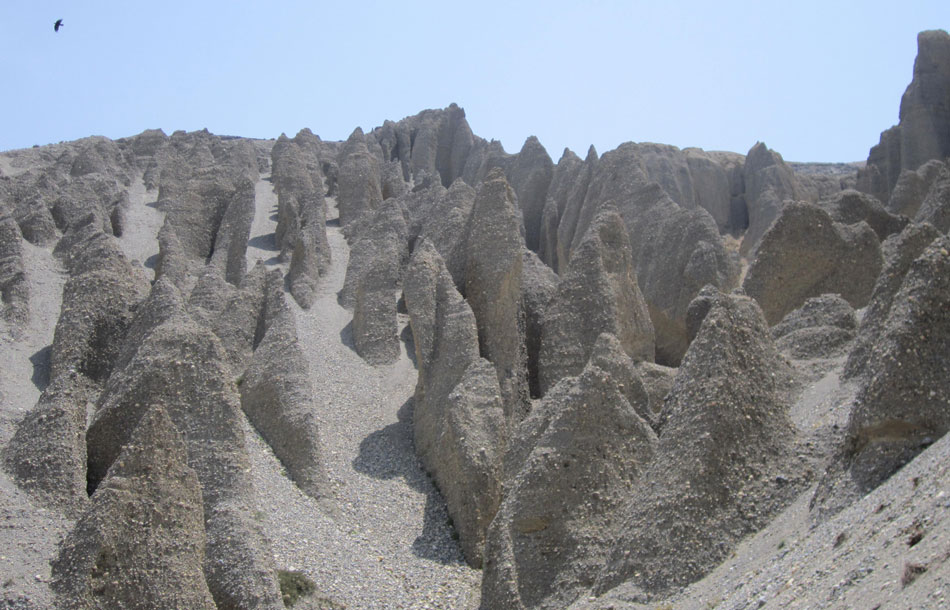
The stark, naked ridges, snow-capped peaks, and the thin settlements scattered around the Kali Gandaki river valley create a mesmerizing and delightful landscape for travelers.
Often called "The Last Forbidden Kingdom," a lost fragment of the Tibetan plateau, Upper Mustang is a stronghold of Himalayan Buddhist culture. Here, you can find remnants of the ancient Bon religion, which predates the spread of Buddhism in Tibet.
Another remarkable feature of this valley is the evidence of meditation and spiritual practices undertaken by Hindu and Buddhist masters thousands of years ago in its many cave monasteries. These historical sites remain a fascinating subject for study and exploration.
Until the end of the monarchy in Nepal, Upper Mustang had its own cultural king, revered by the local people. Even today, after (2008) the kingdom was formally integrated into the republic, the people continue to hold the king's descendants in high esteem and respect.
While development and motorable roads have expanded across Nepal's hilly regions, Mustang has also been connected. A road now reaches up to the Tibetan border at Korala. Many tourists today travel to Upper Mustang by jeep, returning the same way. Others fly to Jomsom and begin their trek from there to the capital of Lo Manthang and back.
To the north of Lomanthang lies the sacred Damodar Kund, a holy pilgrimage site for Hindus. Reaching this lake requires a three-day walk from Yara village (near Luri Gumpa).
We have been organizing trekking adventures for travelers for a long time. If you need more information or wish to arrange your journey, please remember to contact us. We are committed to providing high-quality services and facilities to make your trip a memorable experience.
Accommodation & meal in Upper Mustang trek:
In Upper Mustang region, good quality lodges and guesthouses for food and accommodation are now available. You can also enjoy services like internet and electricity.
Upper Mustang Trek: Permit Information:
A journey to the remote and restricted area of Upper Mustang (north of Kagbeni) requires a special trekking permit, which we can help you secure.
Upper Mustang Restricted Area Permit:
- Cost: USD $500 for the first 10 days, and USD $50 per additional day.
- Regulation: Permits must be applied for through a registered Nepali trekking company for a minimum of two persons.
- Alpine Asian Treks and Expedition P. Ltd. will handle the entire permit application process on your behalf.
- Required Documents: To apply, we will need a clear copy of your passport and a recent digital photograph.
Additional Permit: Annapurna Conservation Area Permit (ACAP) for this trek.
Best time to trek Upper Mustang : The ideal window for the Upper Mustang trek is from April to early November. This period offers stable weather, clear skies, and the most comfortable temperatures for trekking. A major highlight is the annual Tiji Festival in Lo Manthang, a vibrant three-day celebration rooted in Tibetan Buddhism. This event is so significant that many locals living abroad return to their homeland to participate..
Weather and climate: Situated in the Himalayan rain shadow, Upper Mustang (north of Kagbeni) receives very little rainfall, viable even during the monsoon season.
• Spring (March - May): Days are pleasantly warm and sunny (up to 20°C), but nights remain cold, often dropping to around 0°C.
• Monsoon/Summer (June - September): While the rest of Nepal experiences heavy rain, Upper Mustang stays relatively dry. Temperatures are at their warmest, ranging from 20°C to 30°C during the day.
• Autumn (October - November): Nights begin to get colder.
• Winter (December - February): Trekking is not recommended.
Trekking Guide to Upper Mustaing: Your journey will be led by an experienced, government-licensed trekking guide. Our guides are knowledgeable about altitude sickness, local culture, history, and geography. They are fluent in English; if you require a guide who speaks another language, please inform us in advance so we can make the necessary arrangements.
Trekking equipment in Upper Mustang trek: The Upper Mustang trekking is considered as demanding trekking. It requires good preparation to complete it well such as proper clothing and physical fitness.
Pricing of Upper Mustang Trek: the cost of the Upper Mustang trek is quoted in US Dollars or the equivalent in Nepalese currency. Our pricing is transparent and reflects the quality of services included, such as permits, accommodation, meals, and guide services. A detailed breakdown of all inclusions and exclusions will be provided with your itinerary..
Can you trek alone: A special permit is required for Upper Mustang, which mandates a minimum of two trekkers. If you are traveling solo, we can often pair you with another individual or a small group to obtain the permit. Once the permit is issued and you enter the restricted area, you have the flexibility to trek at your own pace with your private guide.
Can visit Lama, King : While the monarchy was officially dissolved, the cultural legacy remains. It is sometimes possible to request an audience with the former head of the Mustang Kingdom, Jigme Parwal Bista, subject to his availability and permission. It is common and encouraged to meet with Lamas in the ancient monasteries throughout the region.
Date change possible: Permit dates are fixed and generally cannot be changed after issuance. In cases of genuine emergency, we can request a postponement from the authorities a few days in advance, but this is not guaranteed.
How to book: To make a reservation, we require passport details, flight details and passport size photo. We will proceed the permit and necessary formalities and once you arrive, with your original passport the permit will be apply.
Payment and booking: A 25% advance payment of the total trip cost is required to confirm your booking. Alpine Asian Treks accept payments via bank transfer or major credit cards. The remaining balance is due when you arrive in Kathmandu.
Day to Day Itinerary
Arrive In Kathmandu
Our representative will be see you in the Nepal airport and transfer to Hotel in the city center. We will welcome to our city office and finalize the formalities. Take a free easy evening to stroll around. Over night in the Hotel.
Kathmandu Sightseeing
Breakfast will be serve at hotel's restaurant and drive to sightseeing by car with guide to the world heritage sites (Pashupatinath- Hindu temple, Boudhanath - Buddhist stupa, Swyambhunath - Buddhist Stupa and Patan Durbar Square). Back to Hotel and after refreshment walk to visit our office, briefing about trekking and introduce guide and other staff. Free in the evening. Overnight in the Hotel. BB
Drive To Pokhara:
After early breakfast drive to Tourist bus park. Take a regular tourist bus at 7:00AM which will take approximately 6hr.Transfer to hotel and after refresh, walk around the lake side. Overnight in the Hotel. BB
Fly To Jomsom & Trek To Kagbeni [2,858m/9,375ft]: 3-4 Hrs
Have a light breakfast at your hotel and drive to airport. Take 20 minutes Trans Himalayan flight to Jomsom. You will view and can take some video of over 8,000 M Mountain such as Annapurna & Dhaulagiri. After some tea and coffee continue trek to Kagbeni. Lunch will be serving on the way. Dinner will at the guest house.
Trek To Chele [3050m/10,004ft]: 5-6 Hrs
You will check in to the control area of Nepal and follow the Kali Gandaki (Holy river) to Chele a small village. During the walk we have scenic picturesque place to stop through the sandy and windy trails. This trails follows the up and downhill. We will come on cross white washed houses, fields of buckwheat, barley, wheat and apple gardens. We head on to small ridges reach at Chele village. Lunch will be serving on the way. Dinner will at the guest house. Overnight at Loge/ guest house.
Trek To Syanbochen [3475m/11,398ft]: 6-7 Hrs
The trek will hike through the barren mountain Tibetan cultural village. You will pass through a narrow trails and rocky trails. You will come on cross the cave known as Ramchung Cave. Lunch will be serving on the way. Dinner will at the guest house. Overnight at Loge/ guest house. (B, L, D)
Trek To Ghami [3520m/11,546ft]: 5-6 Hrs
your will encounter two passes (Yamda La (3,850m and Nyi Pass 4,010m) before arrive to Ghami. The trail passing about 400m, you may feel difficult to breath as this is a dry region as well as. This day would be a little longer. Ghami is the third largest village in the Lo region, is surrounded by large fields most of which are barren. Over night at Loge/ guest house. Lunch will be serving on the way. Dinner will at the guest house (B, L, D)
Trek To Charang [3500m/11,480ft]: 4-5 Hrs
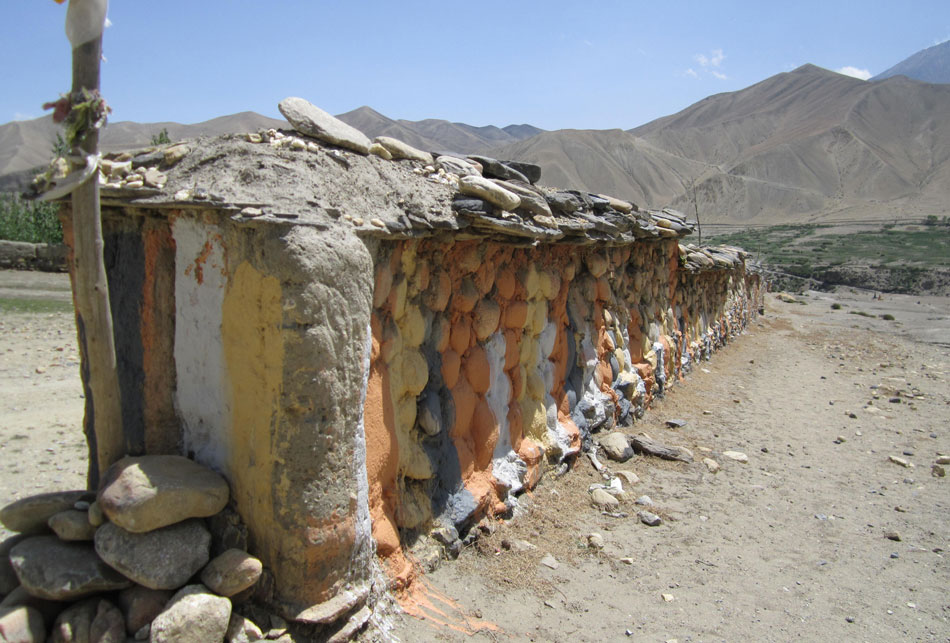
Trek starts after breakfast with a pleasant walk. After crossing Ghaymi Khola, the trail climbs to a plateau and passes beside a very long Mani wall, a sacred stone wall made by the Buddhist followers. From the end of the wall, the village starts and each house are making separate by stone wall. Lunch will be serving on the way. Dinner will at the guest house (B, L, D)
Trek To Upper Mustang (Lo-Mangthang) (3700m/12,136ft): 5-6 Hrs
Today, We trek to our final destination, Lo-Mangthang (the lost forbidden kingdom of TIbet) with a magnificent view of Nilgiri, Tilicho, Annapurna I and Bhrikuti peak. The trail first descends to Charang Chu Canyon and then climbs steeply after crossing the river. While arriving to Lo-Mangthang, views of the walled city appear magnificent with its hills on the north Tibetan Border. Over night at Loge/ guest house. Lunch will be serving on the way. Dinner will at the guest house.
Explore Upper Mustang (Lo-Mangthang)
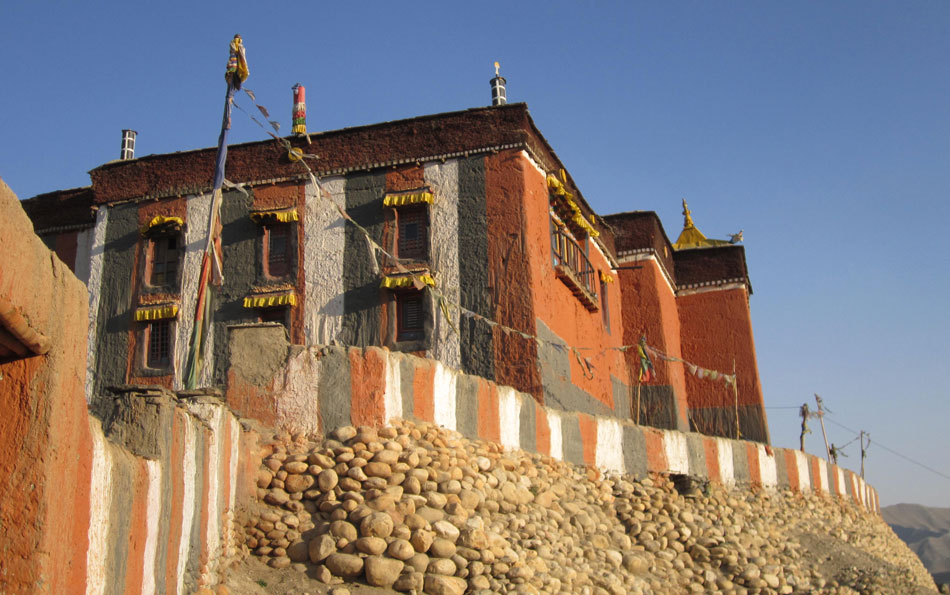
This is a great day to explore the virgin of Lomanthang, the major Gumpas around the Lo-manthang including Namgyal Gompa, Tingkhar, Champa Lakhang "God house", Thugchen Gompa, Chyodi Gompa and the Entrance Hall and around. Another attraction is the four-story building of the king's palace as well as the surrounding panoramic views of the Himalaya. Overnight at guest house. Lunch and dinner will be provided from the guest house.
Upper Mustang (Lo-Mangthang) To Drakmar [3810 M/12,500ft]: 6-7 Hrs
Trek to Drakmar is little diversion than a you trekked while going. This will give you some wonder while arrive at Gyakar, with more than 1200 years old Ghar Gompa with Guru Rinpoche. The Gompa is also famous for its rock paintings. Explore the local area. Over night at Loge/ guest house. Lunch will be serving on the way. Dinner will at the guest house.
Trek To Ghiling [3806m/12,484ft]: 5-6 Hrs
This is an easy descending to Ghiling. It will take approximately 6 hrs. Starting early in the morning is always better while trekking this areas as afternoon seems dusty and windy. Over night at Loge/ guest house. Lunch will be serving on the way. Dinner will at the guest house.
Trek To Chusang [3050m/10,004ft]: 5-6 Hrs
Trek To Jomsom [2700/8,856ft]: 6-7 Hrs
Trek down to Kagbeni will join you to regular Annapurna Circuit. Your permit will be sign out at Kagbeni and continue to trek to Jomsom. Enjoy your last night at the mountain. You can invite to your crew to join a last night party and make little like a party. Lunch will be at Kagbeni and dinner at you lodge. Overnight at guest house.
Fly Back To Pokhara:
Drive To Kathmandu.
After a light breakfast, take a taxi to tourist bus park and ride a regular tourist bus to Kahtmandu. Transfer to your hotel and free.
Free Day In Kathmandu.
This is a cushion day that has been built into the itinerary to allow for delays due to flights or other reasons beyond our control. If you are able to complete your trek in time then this day may be used for sight seeing around Kathmandu Valley. Or free for shopping days.
Transer To Airport And Fly Back To Home
Enjoy the morning around downtown for last minute shopping or etc. later we will transfer to airport for the final departure.
Home sweet home
Whats Included?
Accommodation
- 4 night hotel in Kathmandu on BB twin sharing
- Two night hotel in Pokhara on BB twin sharing
- Lodge/ guest house accommodation in trekking on twin sharing
Meals
- All meals (breakfast, lunch and dinner) whilst on a trek form lodge/ guest house.
Transportation
- Airport transfers (by private car, van or bus as per group size)
- All land transfers as per itinerary to trek.
- Domestic flights and departure taxes as per itinerary.
Other
- Applicable trekking fees. (Special permit requires to trek to Upper Mustang)
- Porters (one porter per two persons is provided to carry the clients personal effects)
- Trekking equipment (duffle Bag for your gear, sleeping bag)
- Trekking staff (guide with government license holder and other assistant guides where applicable).
- Insurance for the trekking staff. (insurance as per state law)
- First aid medical kit
- All the government tax and our (AATE) service charges.
- Upon final payment AATE will provide pre-departure file including the detailed agreed itinerary, hotels and transport booked and introduce you to your trekking guide.
Whats not Included?
Not Included
- Personal trekking equipment
- Extra accommodation and meal than itinerary
- Lunch and dinner in the city
- International flights, visa and departure taxes
- Your travel insurance (for travel, cancellation, accident, health, emergency evacuation and loss of life, theft of or damage to personal effects).
- Tips and gratuities (crew frequently receives some recognition for good service)
- Costs arising from unforeseen events outside the control of AATE.
- Personal expenses such as alcoholic beverages, soft drinks, mineral water, monuments entrance fees, postage, laundry, video, camera, phone, etc.
- The single supplements payable on all bookings where only one person is traveling.
- All other services not included in the "cost included" section above.
Frequently Asked Questions
Jigme parwal Bista is the last king of Lo-manthang.
Jomson airport is situated at an altitude of 2700m form sea level in between Mt. Annapurna and Mt. Dhaulagiri. The flights are operated in a clear morning. All the flights are flew to morning as it requires a clear vision.