
How Nepal Celebrates the Dashain Festival: 15 Days of Culture and Tradition
9 Oct 2026 Alpine Asian Treks
How Nepal Celebrates the Dashain Festival: 15 Days of Culture and Tradition
Nepal is a country known for its breathtaking Himalayan mountains, diverse cultures, ancient temples, and vibrant celebrations. Among its many cultural events, the Dashain festival holds a special place in the hearts of Nepali people. Celebrated with joy and devotion, this important festival brings families together, honours religious traditions, and represents the victory of good over evil. The Dashain festival is generally celebrated in September or October, following the Nepali lunar calendar. The celebration lasts for fifteen days, beginning with Ghatasthapana and concluding with Kojagrat Purnima. During this period, homes are decorated, markets become busy, relatives travel to meet their families, and people participate in traditional rituals.
For Nepali people, Dashain is more than a religious occasion. It is a time to reconnect with loved ones, receive blessings from elders, enjoy traditional food, and celebrate cultural identity. For international travellers, understanding the Dashain festival offers a meaningful opportunity to discover Nepal beyond its famous mountains and trekking routes. In this guide, we explore how Nepal celebrates Dashain, the significance of its fifteen days, the traditions that make it special, and what travellers should know before visiting Nepal during this festive season.
What Is the Dashain Festival in Nepal?
The Dashain festival, also known as Bada Dashain, is one of Nepal’s most important Hindu celebrations. It honours Goddess Durga and symbolises the triumph of good over evil. According to a widely followed Hindu tradition, Goddess Durga defeated the demon Mahishasura after a fierce battle, restoring peace and protecting the world from evil forces. Another important story associated with the celebration describes Lord Rama’s victory over Ravana, representing the triumph of righteousness over wrongdoing.
These stories give the Dashain festival its central message: good ultimately triumphs over evil, and truth, courage, and righteousness deserve to be celebrated. Across Nepal, families observe the festival through religious worship, family gatherings, blessings, and traditional activities. Although the main customs are widely recognised, practices can vary between communities, regions, and households. The festival also coincides with Nepal’s autumn season, when the monsoon usually begins to retreat and the weather often becomes favourable for sightseeing and trekking.
How Nepal Celebrates the Dashain Festival: All 15 Days Explained
The fifteen-day celebration of Dashain festival includes several important religious observances. While some days involve major ceremonies, others are dedicated to daily worship, preparation, and spending time with family.
Day 1: Ghatasthapana – The Beginning of Dashain
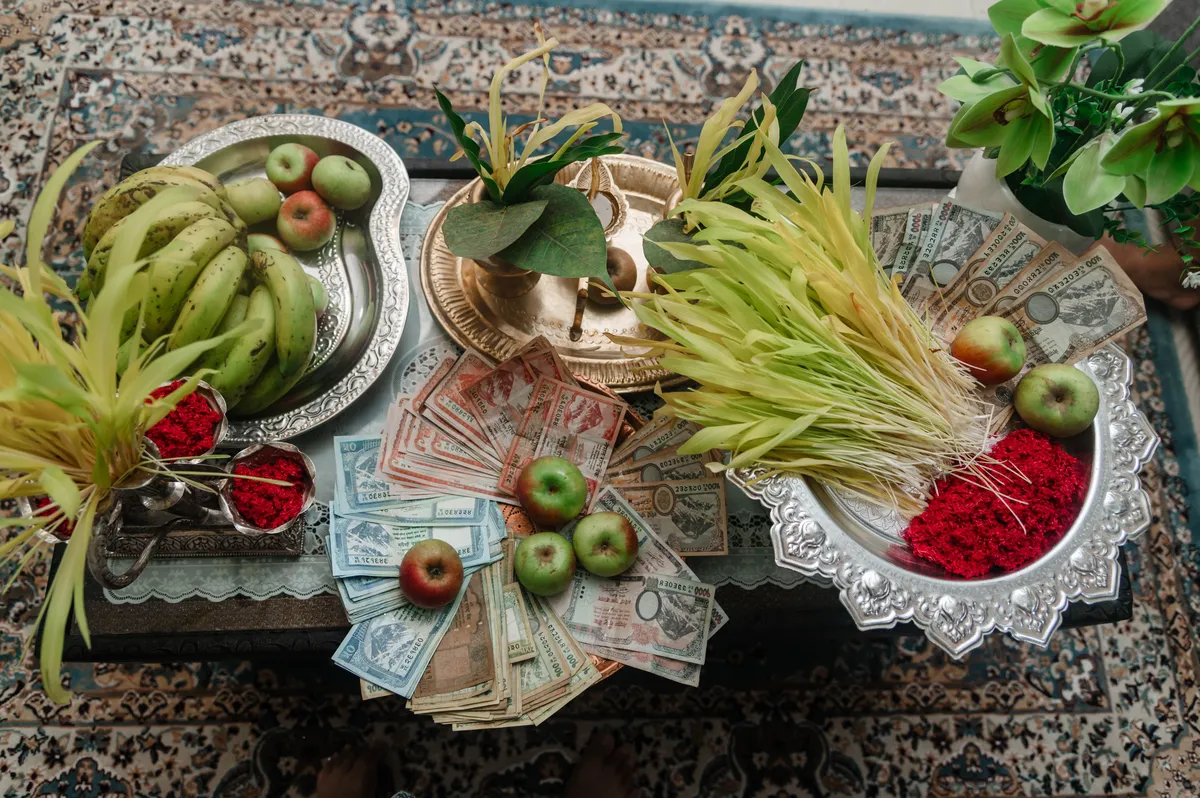
Ghatasthapana marks the beginning of the Dashain festival. On this day, families establish a sacred worship area in their homes, often called the Dashain Ghar. A kalash, or sacred water vessel, is placed as part of the ceremony. Barley seeds are planted in sand or soil in a protected area, where they grow into yellowish shoots known as jamara. Families care for these shoots throughout the festival because they will be used during the main tika ceremony. Jamara symbolises growth, prosperity, and blessings for the future. Ghatasthapana begins the spiritual journey of Dashain and sets the atmosphere for the celebrations that follow.
Days 2-6: Daily Worship and Festive Preparations
The days following Ghatasthapana are generally quieter, but they remain important to the celebration. Families continue worshipping Goddess Durga and caring for their growing jamara. Many devotees visit temples, perform prayers at home, or follow religious practices according to their family traditions. Meanwhile, preparations for the main celebration begin across the country. People purchase new clothes, buy gifts, clean their homes, and prepare ingredients for festive meals. For many families, these days are filled with anticipation. Children look forward to new clothes and family gatherings, while adults organise travel to their hometowns. These preparations show that the Dashain festival is not limited to religious rituals. It is also a time when households prepare to welcome relatives and celebrate together.
Day 7: Phulpati – A Traditional Celebration
Phulpati is one of the major observances during Dashain. The name is associated with sacred flowers and plant offerings used in religious worship. Traditional ceremonies involving flowers, leaves, and auspicious plants take place on this day. Phulpati also has historical connections with Nepal’s former royal traditions and continues to be observed through formal ceremonies. In Kathmandu, official celebrations have traditionally been associated with ceremonial processions and displays. Other communities celebrate according to local customs. Phulpati marks an important transition into the more active days of Dashain festival, when religious ceremonies and family preparations become increasingly prominent.
Day 8: Maha Ashtami – Worshipping Goddess Durga
Maha Ashtami is dedicated to Goddess Durga and her power to protect people from evil. Devotees visit temples, perform puja, and make offerings according to their religious traditions. In some communities, animal sacrifices form part of the observances, while other families follow vegetarian practices or make symbolic offerings. The customs differ according to local beliefs, but devotion to the goddess remains central to the day. During Maha Ashtami, temples and religious sites may attract large numbers of worshippers. For those learning about Nepali culture, this day demonstrates the strong connection between religious faith and community traditions.
Day 9: Maha Navami – Prayers for Protection and Prosperity
Maha Navami is another important day dedicated to Goddess Durga. Families and devotees continue their prayers and participate in ceremonies intended to bring protection, success, and prosperity. One distinctive tradition involves worshipping tools, vehicles, machinery, and equipment used for work. These practices express gratitude for the things people depend on for their livelihoods. Certain temples hold special ceremonies, and some religious sites open to visitors on this day may become particularly busy. The observances of Maha Navami reflect how the Dashain festival connects religious beliefs with everyday life, work, safety, and hopes for the future.
Day 10: Vijaya Dashami – Tika, Jamara, and Blessings
Vijaya Dashami is the most significant day for many Nepali families. It is when the widely recognised traditions of tika and jamara take centre stage. Elders apply tika, commonly made from rice, yoghurt, and vermilion, to the foreheads of younger relatives. They also place jamara on their heads and offer blessings for happiness, good health, success, and prosperity. Some families give dakshina, a traditional monetary gift, to younger members. Relatives travel between homes to receive blessings, share meals, and spend time together. For many people, this is the emotional heart of the Dashain festival. Those working in distant cities or living abroad may travel home specifically to receive tika from their parents and grandparents.
During the Dashain Festival in Nepal, the atmosphere is filled with conversations, laughter, traditional food, and joyful family reunions. Although customs vary across communities, the values of respect, love, and family connection remain central to this special festival. International visitors should remember that tika is a meaningful cultural and religious practice during Dashain. If invited to participate, they can politely follow their host’s guidance and enjoy this beautiful tradition.
Days 11-14: Visiting Relatives and Continuing the Celebration
The days after Vijaya Dashami are often spent visiting relatives, exchanging blessings, and sharing festive meals. Families may continue giving tika to relatives who could not meet them on the tenth day. Children play with cousins, adults reconnect with extended family members, and households welcome guests throughout the period. In some places, people also visit local fairs, enjoy traditional bamboo swings, or spend time outdoors with friends and family. These days highlight the social importance of the Dashain festival. Beyond its religious significance, the celebration creates opportunities for people to strengthen relationships and maintain traditions across generations.
Day 15: Kojagrat Purnima – The Conclusion of Dashain
Kojagrat Purnima falls on the full moon and traditionally marks the conclusion of the fifteen-day Dashain period. The day is associated with Goddess Lakshmi, who is worshipped for prosperity and well-being. In some traditions, devotees remain awake during the night as part of their religious observance. Although the largest family gatherings generally occur earlier, Kojagrat Purnima completes the traditional cycle of Dashain. After the celebrations, people gradually return to their usual routines. Schools, offices, and businesses resume normal activities according to their individual schedules.
6 Popular Traditions of the Dashain Festival
The fifteen days of Dashain include many customs that reflect Nepal’s cultural identity. The following traditions are among the most recognisable.
1. Tika and Jamara
Tika and jamara are central symbols of Dashain. Elders offer them to younger family members while giving blessings for a happy and prosperous future. The red tika and yellowish-green jamara are distinctive features of the celebration. For many Nepalis, receiving these blessings from parents and grandparents is one of the most meaningful moments of the year.
2. Family Reunions
Family gatherings are at the heart of the Dashain festival. People working in Kathmandu, Pokhara, and other cities often return to their hometowns to celebrate with their families. Transport services can become busy as people travel across Nepal. Homes welcome relatives, and family members spend time together after months of living apart. These reunions help preserve relationships and pass cultural traditions from one generation to another.
3. Traditional Nepali Food
Food plays an important role in Dashain celebrations. Depending on the household and region, festive meals may include rice, meat dishes, vegetables, pickles, and homemade sweets. Families prepare special meals for visiting relatives and guests. Sharing food represents hospitality and brings people together around the dining table.
4. New Clothes and Gifts
Many families buy new clothes for Dashain, particularly for children. Gifts and monetary blessings are also common in some households. Shopping areas become busy before the major holidays as people prepare for family gatherings and celebrations.
5. Bamboo Swings and Kite Flying
Traditional bamboo swings, known as ping, are popular during Dashain in many communities. They are often built in villages and open spaces for children and adults to enjoy. Kite flying is another seasonal activity, especially in some urban communities. Colourful kites fill the sky, creating a festive atmosphere during the autumn season.
6. Worship and Religious Offerings
Prayers, temple visits, and offerings are important parts of Dashain. Devotees honour Goddess Durga and seek blessings for protection, prosperity, and happiness. Religious practices vary between communities, making the festival a reflection of Nepal’s diverse cultural traditions.
Best Places to Experience Dashain in Nepal
The Dashain festival can be experienced in different parts of Nepal, although celebrations differ from one community to another.
Kathmandu: The capital offers historic temples, traditional neighbourhoods, local markets, and cultural landmarks. Visitors can observe the city’s festive atmosphere while respecting religious customs and access restrictions.
Pokhara: Known for its lakeside scenery and Himalayan views, Pokhara combines natural beauty with urban culture. Visitors may encounter local celebrations and seasonal activities.
Traditional villages: Rural communities can offer insights into family traditions, local food, and community celebrations. Visiting with a local host or guide can help travellers understand customs respectfully.
Historic towns of the Kathmandu Valley: Places such as Bhaktapur and Patan are known for their traditional architecture, courtyards, and cultural heritage. Visitors should check local schedules and respect private ceremonies.
For travellers who want to combine culture with outdoor activities, autumn can also be a good time to explore Nepal’s trekking regions. However, weather and trail conditions vary, so check current conditions before setting out.
Travel Tips for Visiting Nepal During Dashain
Planning ahead can help international visitors enjoy Nepal during Dashain.
- Book transport early: Buses and other transport services can become busy as people travel home for the holidays.
- Check opening hours: Some shops, offices, and service providers may close or operate on reduced schedules.
- Respect religious customs: Ask before photographing people or ceremonies, and follow local guidance at temples.
- Dress appropriately: Wear respectful clothing when visiting religious sites and follow local rules.
- Allow extra time: Holiday traffic and reduced transport availability can affect travel plans.
- Plan trekking carefully: Confirm permits, accommodation, transport, and local trail conditions before your journey.
- Accept invitations respectfully: If invited to a family celebration, ask your host about appropriate behaviour and whether participation in a ritual is welcome.
With thoughtful preparation, the Dashain festival can offer visitors a memorable introduction to Nepal’s culture and hospitality.
Why the Dashain Festival Is Important to Nepali Culture
The significance of Dashain extends beyond religious worship. It represents family unity, respect for elders, gratitude, and hope for a better future. For people living away from home, Dashain provides an opportunity to return to their roots and reconnect with family members. For children, the festival creates memories of tika, jamara, festive food, new clothes, and time spent with relatives.
The celebration also reflects Nepal’s cultural diversity. While many households share familiar traditions, the details of their celebrations can vary according to region, community, and personal beliefs. For international visitors, learning about Dashain offers a deeper understanding of Nepal’s people and everyday cultural life. The country’s identity is shaped not only by its mountains and landscapes but also by the traditions that connect families and communities.
Conclusion
The Dashain festival is one of Nepal’s most meaningful celebrations, bringing together fifteen days of religious observances, family reunions, traditional food, and cultural activities. From Ghatasthapana and the planting of jamara to Phulpati, Maha Ashtami, Maha Navami, and Vijaya Dashami, every major observance contributes to the festival’s rich cultural significance. For Nepali families, Dashain is a time to receive blessings, honour traditions, and reconnect with loved ones. For international travellers, it offers a valuable opportunity to understand Nepal beyond its famous trekking routes and Himalayan scenery. Whether you explore Kathmandu’s historic neighbourhoods, visit Pokhara, or spend time in a traditional village, understanding the Dashain festival can make your experience of Nepal more meaningful.
At Alpine Asian Treks, discovering Nepal means appreciating both its natural beauty and its living cultural heritage. Learning about the traditions behind Dashain helps visitors understand the people, values, and celebrations that make every journey through Nepal unique.